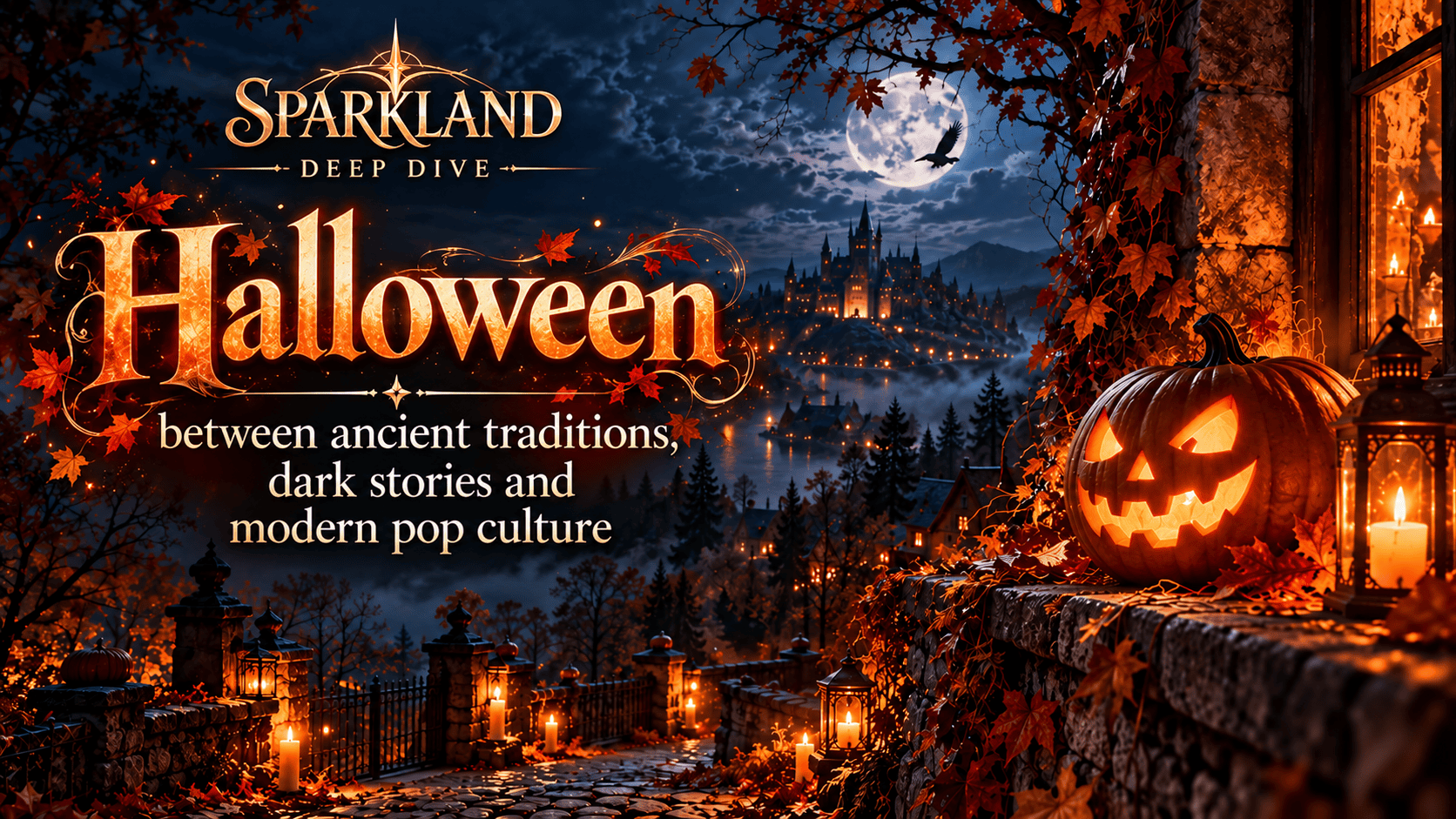
A pumpkin glows outside a front door. Somewhere, a costume rustles. A voice suddenly sounds a little more sinister than usual. For a moment, it is not quite clear who is supposed to be frightening whom.
Then laughter breaks out. A door opens, and the evening goes on.
That is part of Halloween’s appeal. Familiar things take on a different meaning. A stranger seems to hide behind a mask, and an ordinary doorway becomes the setting for a little ghost story. Things that might unsettle us in everyday life suddenly feel like part of the fun.
But Halloween is about more than pumpkins, costumes, and a little thrill of fear. The celebration draws on old customs, cultural influences, and stories that have been retold and reimagined across generations. Books, films, television, and video games have all helped shape it, as have the people who continue to celebrate Halloween in their own ways.
The festival has never stood still. That is what makes its history so fascinating. It does not follow a straight line from an ancient ritual to the jack-o’-lanterns we know today. Instead, it winds through different periods, places, and ways of understanding the world.
This article is part of the Sparkland Halloween Marathon. Alongside the stories, traditions, and history explored in the articles, cosplay images bring a creative dimension to the series. They show how characters from fantastical worlds can take on a new life through costume, styling, and atmosphere. The images are part of the marathon’s visual storytelling, connecting Halloween’s traditions with the imaginative worlds that continue to inspire it today.
Why Halloween Is More Than a Night of Scares
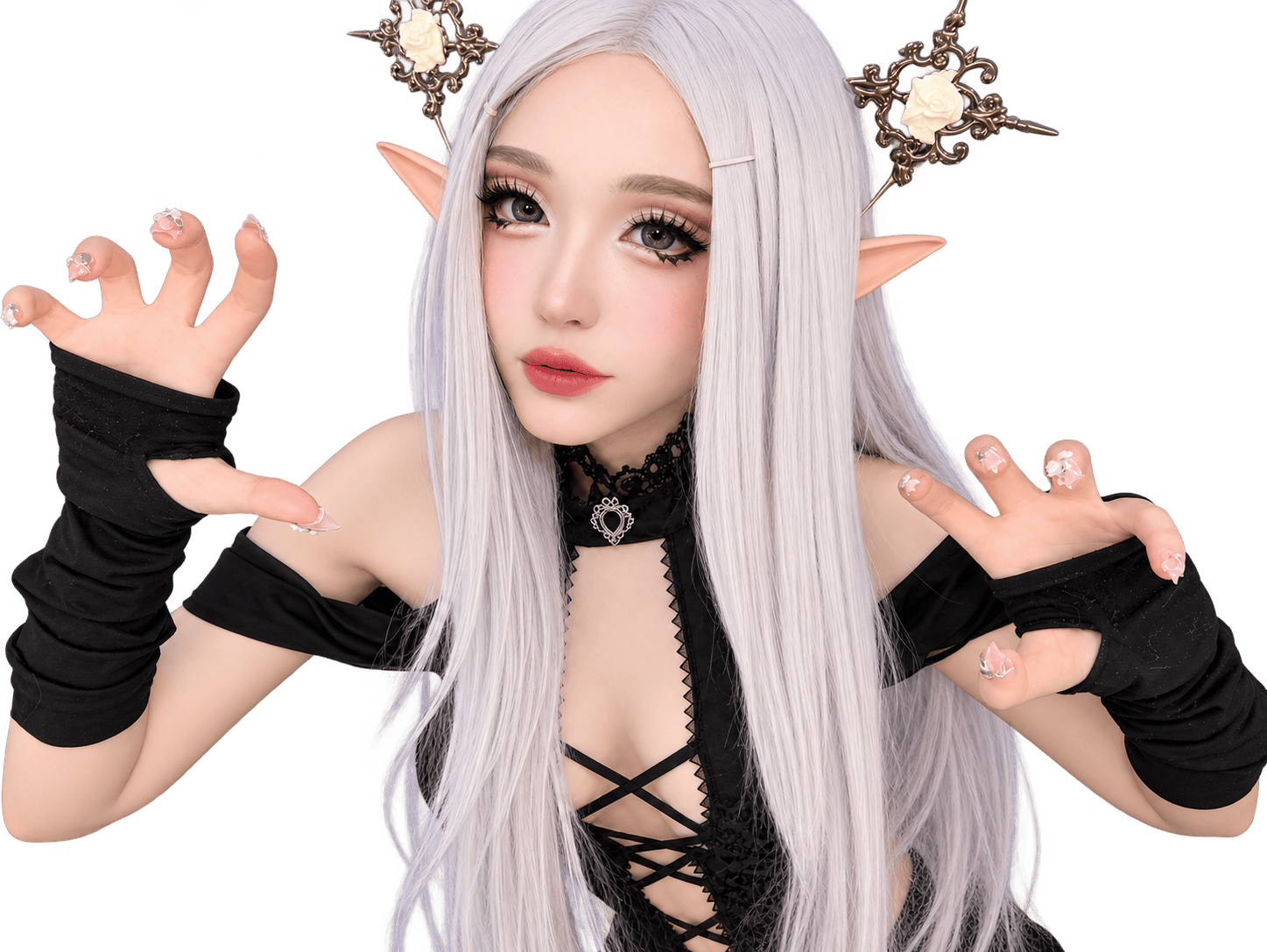
An ethereal silver-haired elf in gothic black lace, adorned with ornate rose ornaments and a playful, claw-like pose. 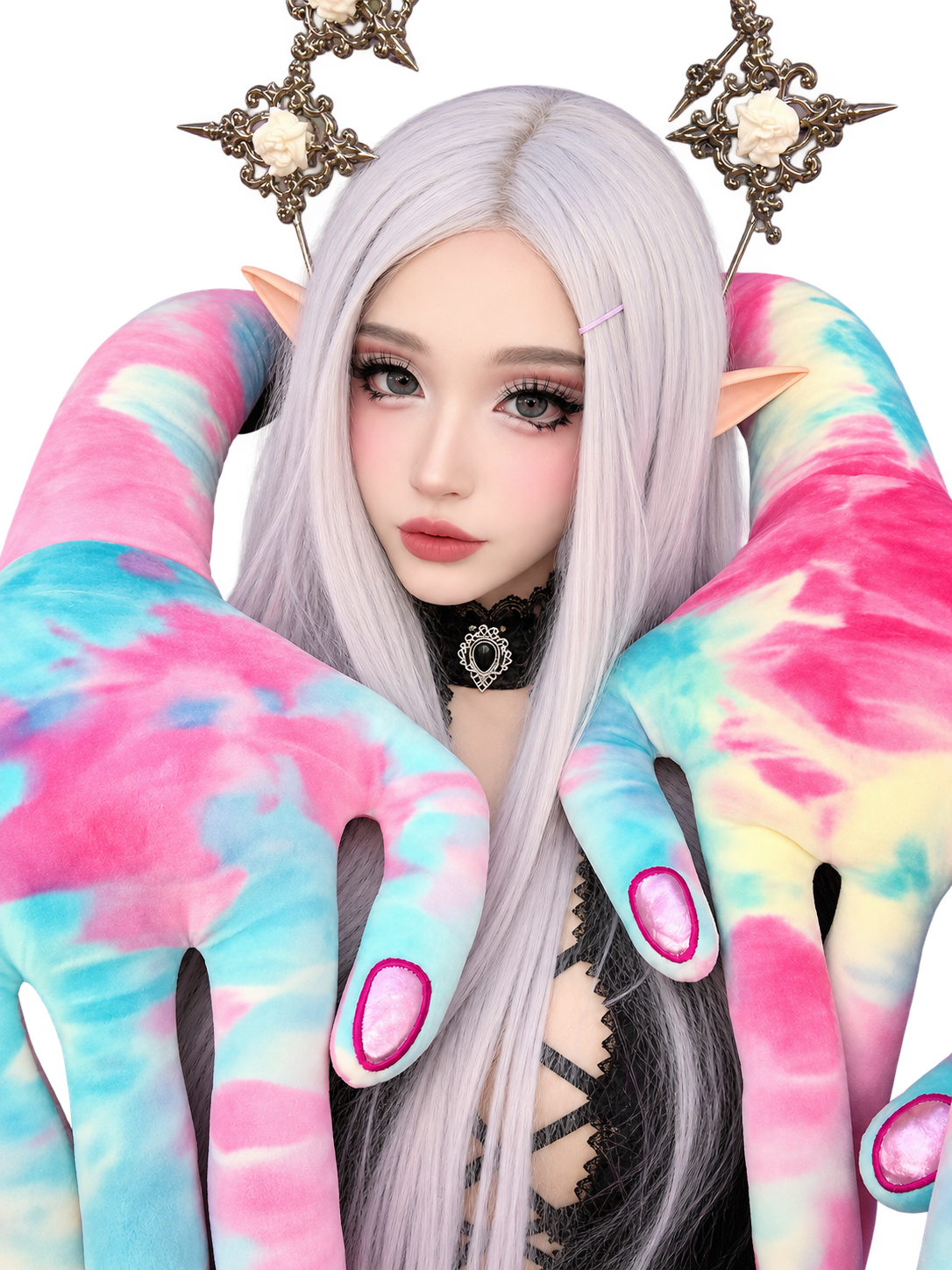
An ethereal gothic elf surrounded by pastel tentacles, blending dark fantasy elegance with playful pink-and-turquoise colors. 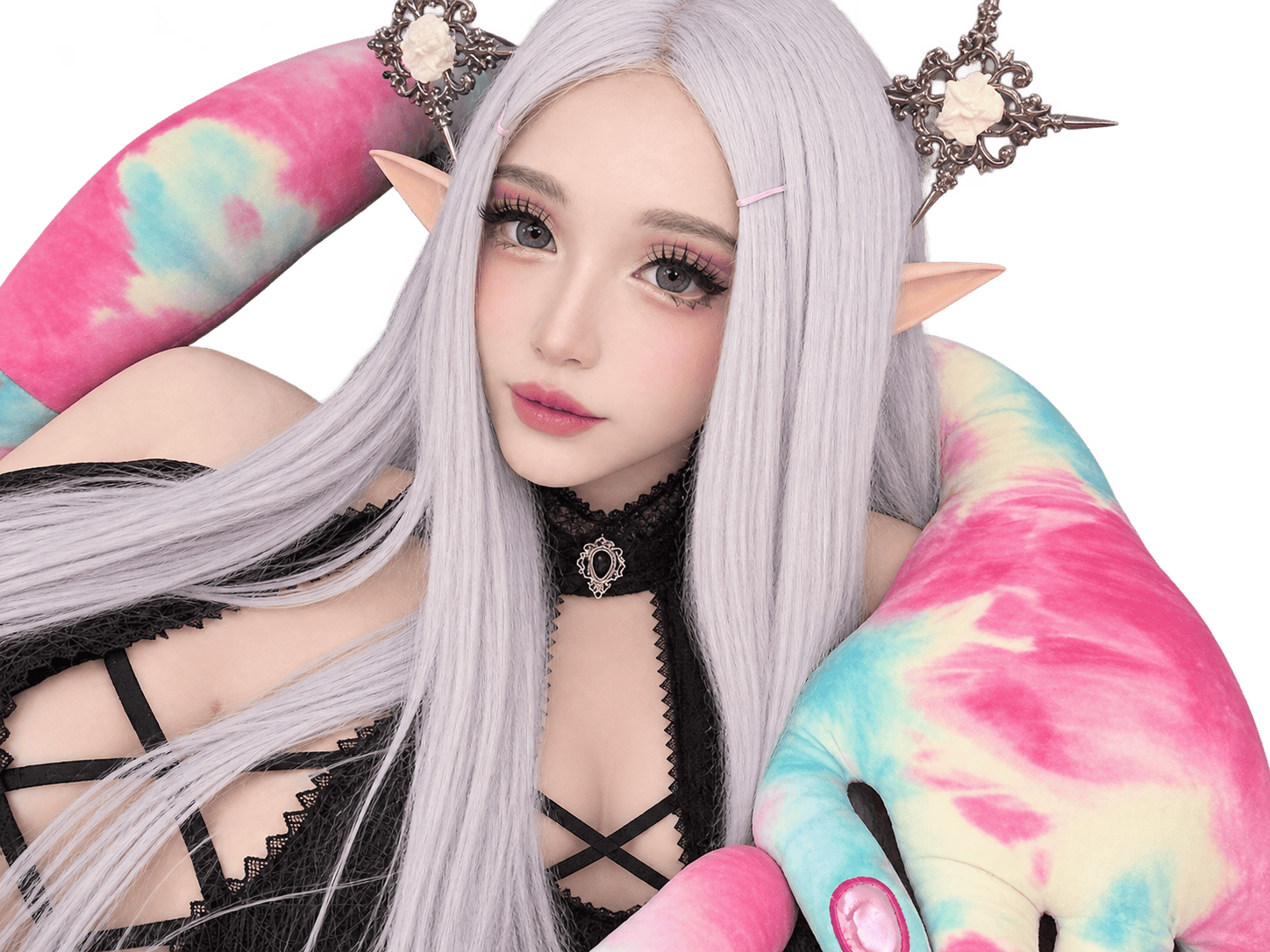
An ethereal gothic elf embraced by pastel tentacles, where dark fantasy elegance meets playful, dreamlike colors. 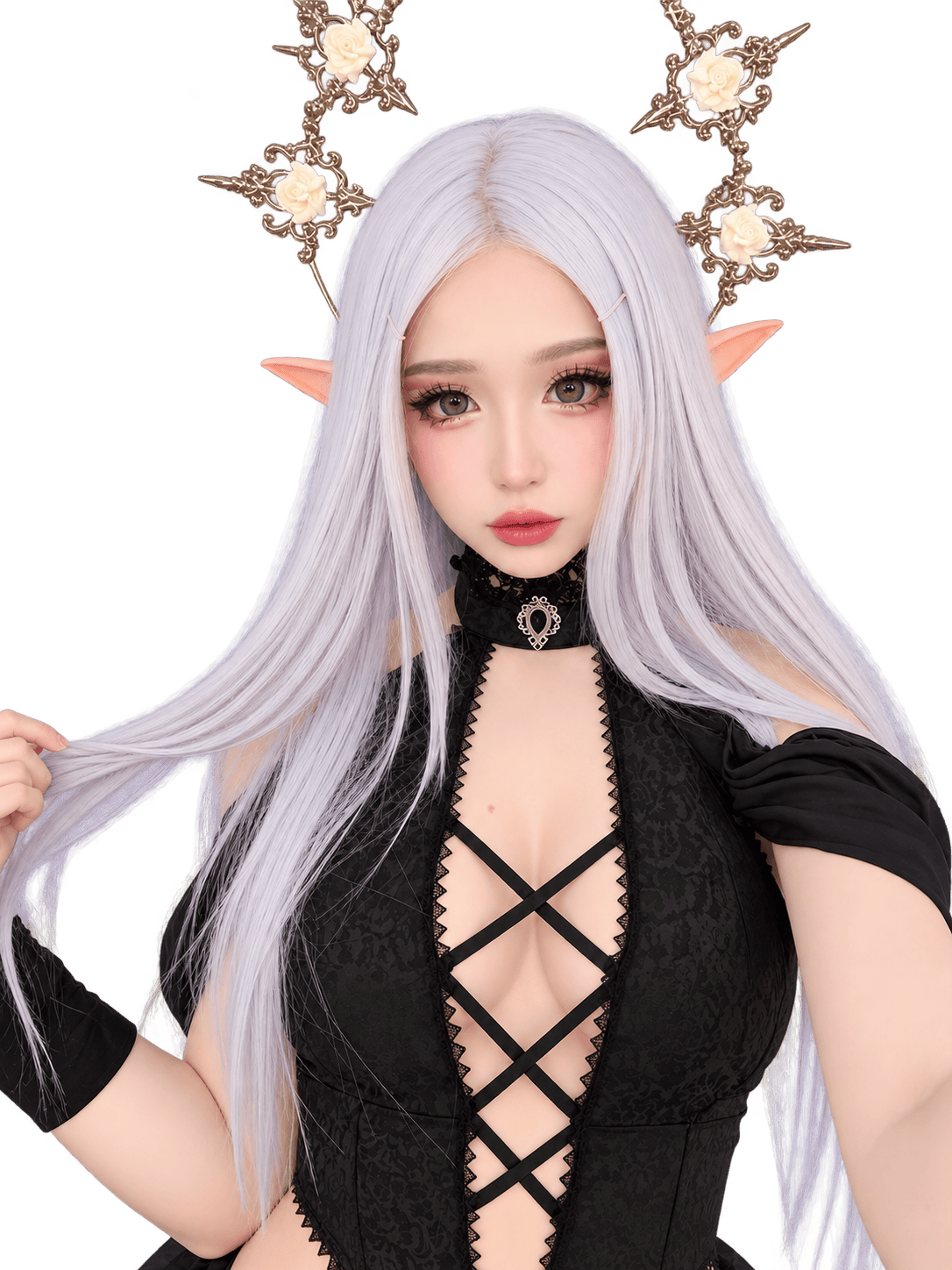
An ethereal silver-haired elf adorned with ornate rose ornaments, intricate black lace, and elegant gothic details. 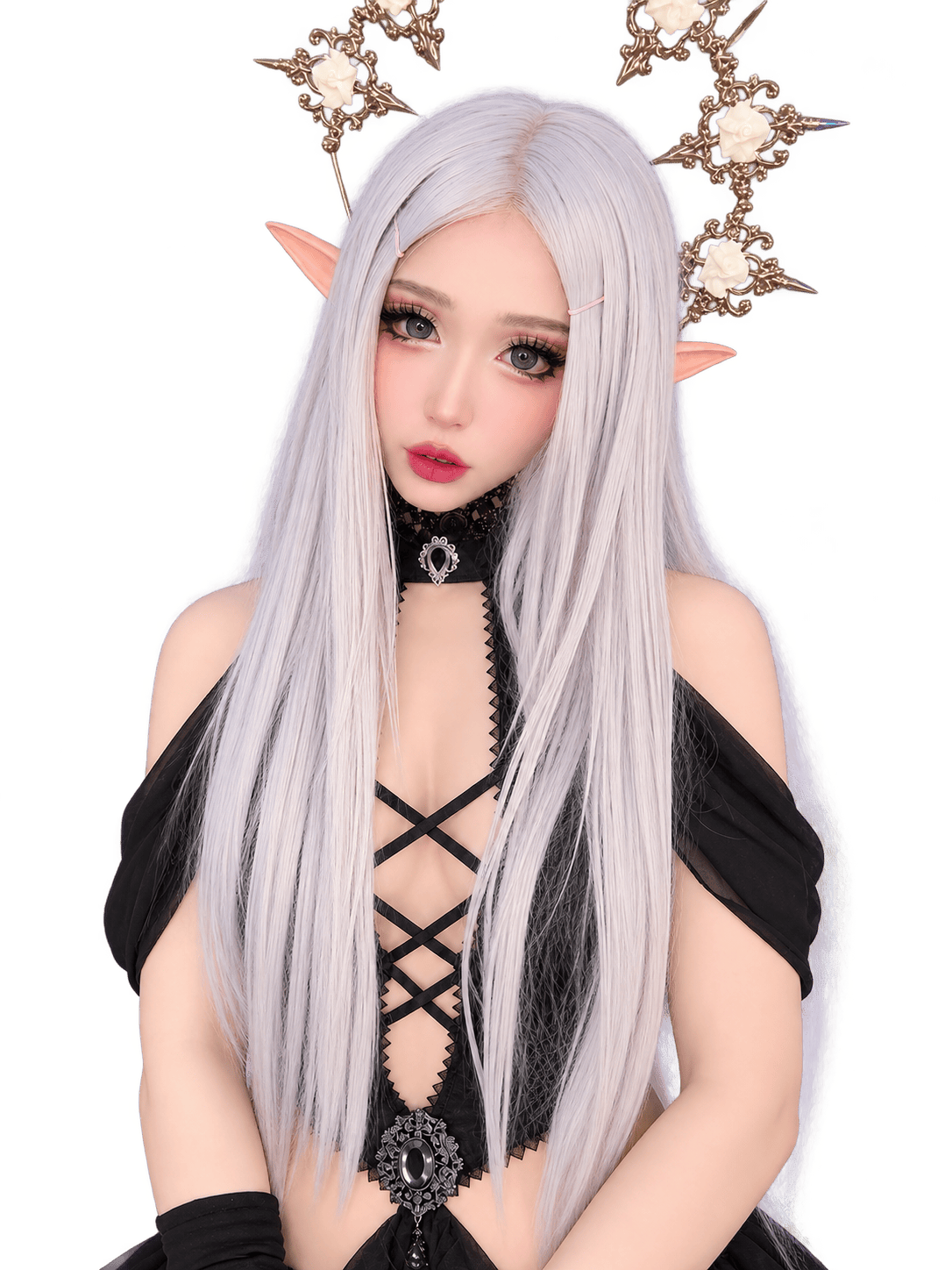
An ethereal silver-haired elf adorned with an ornate rose crown, intricate black lace, and elegant gothic jewelry.
On Halloween, the strange and unsettling are allowed to step outside. Front gardens become miniature scenes of horror, people slip into unfamiliar roles, and a walk around the neighborhood might bring you face to face with a witch, a vampire, or some other creature usually found in stories. What might seem odd on an ordinary day suddenly feels perfectly at home.
The appeal goes beyond the thrill of being frightened. Halloween touches on subjects that have fascinated people for centuries: death and remembrance, transformation and identity, community, and the pull of the unknown. At the same time, the celebration makes these subjects feel a little less daunting. We can explore them through a ghost story, put on a costume, or laugh together after a particularly effective scare.
Everyone can find their own way into Halloween. For some, it means sweets and carved pumpkins. Others look forward to elaborate costumes, horror movies, or the chance to transform their homes into eerie little worlds. Halloween can be dark and playful, unsettling and cozy, all at once.
It is not, however, an ancient ritual that has been celebrated unchanged for thousands of years. The Halloween we know today developed through a variety of customs, religious traditions, and cultural influences. To understand how it took shape, it helps to look back at its historical roots—without reducing a complicated history to a single, tidy origin story.
Samhain, Christian Feast Days, and the Evolution of a Tradition
Anyone exploring Halloween’s history will soon come across Samhain. In historical Ireland, this seasonal festival marked the beginning of winter and was an important point in the yearly cycle. It is often described as the origin of Halloween. There is a historical connection between the two, but the path from the festival of the past to modern Halloween was far from straightforward.
Modern accounts sometimes present Samhain as a unified Celtic New Year or a great festival of the dead celebrated throughout the Celtic world. Historians have cautioned that the surviving sources offer only limited support for such sweeping descriptions. Ideas recorded or developed in later periods cannot simply be projected back onto earlier centuries.
Christian observances also shaped the story. All Saints’ Day is celebrated on November 1, followed by All Souls’ Day on November 2. The word Halloween derives from All Hallows’ Eve—the evening before All Saints’ Day.
Different customs developed around these dates in different regions. In Ireland, historical accounts describe communal meals, the collection of offerings, and prayers for the dead. Religious beliefs and local traditions influenced one another as these practices evolved.
There is no single, fully documented origin story that explains everything about Halloween. The festival did not emerge because an ancient celebration survived unchanged into the present. Customs shifted, met other traditions, and acquired new meanings along the way.
The practices of dressing up and going from house to house offer a particularly vivid example of this process. They help us understand some of the customs now associated with Halloween, even if their history cannot be reduced to one simple line of descent.
From Guising to Trick-or-Treating
Putting on a costume, knocking on a door, and hoping for sweets is now a familiar part of Halloween for many children. The custom has a longer history, though, shaped by several older practices.
In Ireland and Scotland, a tradition known as guising involved people dressing up and visiting houses. They might sing songs, recite verses, or perform small entertainments in return for food or other gifts. Another custom, known as souling, was particularly associated with England. People went from door to door asking for soul cakes, with the gifts linked to prayers for the dead.
The similarities to modern trick-or-treating are easy to spot. But they do not prove that today’s custom developed directly and unchanged from any one of these traditions. Other practices may also have played a part. Historically, it is important to distinguish between customs that resemble one another and evidence of a direct line of descent.
In the United States, Halloween took various forms during the late nineteenth and early twentieth centuries. Accounts from the period describe costumes, games, jack-o’-lanterns, and pranks. The celebration was already diverse before the familiar version of trick-or-treating became widely established.
During the twentieth century, organized celebrations and going from house to house became increasingly important. Trick-or-treating spread further after the Second World War, while sweets and commercially produced costumes became established features of modern Halloween culture.
Neighborhood traditions, communal celebrations, and consumer culture gradually became more closely intertwined. Yet sweets alone cannot explain the festival’s appeal. Halloween also offers the chance to become someone else for an evening—and to make the familiar world feel just a little more mysterious.
And every world of ghost stories needs its inhabitants. Some of Halloween’s most recognizable creatures have been with us for centuries. Others acquired their familiar forms through literature, film, and popular culture.
Witches, Vampires, and Werewolves: The World of Monsters
Witches, vampires, and werewolves are firmly established in horror culture today. Their stories reach far beyond modern Halloween, and the way we imagine these creatures has changed over the centuries. Religion, literature, social fears, and the media of each era have all helped shape them.
The witch is a particularly versatile example. Depending on the period and the story, she might appear as a threatening figure, a mysterious source of knowledge, or an outsider who challenges the rules of her world. In Shakespeare’s Macbeth, the witches deliver cryptic prophecies that raise questions about power, fate, and human uncertainty.
The modern vampire image also emerged from a variety of influences. John Polidori’s 1819 story The Vampyre and Bram Stoker’s 1897 novel Dracula helped shape the vampire in literature. They did not invent every existing idea about vampires, but they gave readers memorable figures that would be revisited in films, television, and many other media.
Werewolves explore a different boundary: the one between human and animal. Stories of people transforming into wolves date back to antiquity and continued to develop through later literary traditions. Depending on the tale, the transformation might be a curse, a loss of control, or an expression of something hidden within a person.
All three creatures cross boundaries that usually seem clear. The witch connects knowledge with danger, the vampire brings life into contact with death, and the werewolf blurs the line between human and animal. They give the unknown a face. That makes it easier to grasp—but not necessarily less frightening.
Film, television, literature, and video games have continually reinvented these figures. Some have become tragic outsiders, others comic characters or the heroes of their own stories. A vampire no longer has to be the sinister stranger, and a witch can be just as easily a character to identify with as an enemy to fear.
Monsters have not survived because every generation has repeated the same old ideas. They have survived because every generation has found new ways to tell their stories.
But why do we willingly seek out these stories in the first place? Why let ourselves be frightened when we usually try to avoid fear in everyday life?
Why We Enjoy Being Scared
In everyday life, we generally try to avoid danger. Horror films, haunted attractions, and unsettling games turn that instinct on its head. We deliberately seek out experiences designed to scare us—and sometimes enjoy every moment.
One important difference is that we understand the setting. We know a film is staged or that a haunted attraction operates according to certain rules. Even so, the fear we feel in the moment can be very real. Our bodies respond to suspense, sudden noises, and threatening images, even when we do not necessarily interpret the situation as an actual danger.
A field study published in Psychological Science in 2020 examined 110 visitors, aged twelve to fifty-seven, at a haunted attraction. The results showed an inverted U-shaped relationship between reported fear and enjoyment: more fear did not automatically mean more fun. Instead, enjoyment appeared to depend on the intensity of the experience.
This is not a universal rule. The study focused on one particular attraction, and people respond to horror in very different ways. What one person finds exciting may be simply unpleasant for someone else.
Suspense also plays a part. What is waiting behind the door? Why is that figure behaving so strangely? Will the main character escape the danger ahead? Questions like these keep us involved in a story. When the tension finally subsides, relief often follows—sometimes along with shared laughter at just how thoroughly we were startled.
Horror stories can also give us a safe setting in which to explore danger, death, and the unknown. That does not mean fear is automatically enjoyable or that everyone finds the same things frightening. It does help explain why some people find horror so compelling when the tension feels intense without making them feel genuinely threatened.
Halloween brings these possibilities together. The uncanny enters everyday life, but we can choose how far we want to go. We can dress up, tell a ghost story, or simply enjoy the glowing pumpkins along the street.
The festival also touches on questions of death and the boundary between the living and the dead. Similar themes appear in other celebrations, though they can carry very different meanings.
Death and Remembrance: Not Every Festival of the Dead Is Halloween
Ghosts, the undead, and the idea of a permeable boundary between life and death are familiar Halloween themes. Similar ideas appear in other traditions, too. That does not mean these celebrations share the same meaning or the same history.
One well-known example is Mexico’s Día de Muertos, or Day of the Dead. Families create altars known as ofrendas, decorating them with flowers, candles, food, photographs, and personal mementos. The tradition was added to UNESCO’s Representative List of the Intangible Cultural Heritage of Humanity in 2008.
In many communities, the celebration centers on remembering deceased loved ones and maintaining a connection between the living and the dead. Its forms vary from region to region and from family to family. The Día de Muertos is therefore not simply a Mexican version of Halloween. Its cultural and religious background has its own history and deserves to be understood on its own terms.
Japan also has Obon, a distinct tradition of honoring ancestors associated with Buddhist beliefs. Families remember those who have died, and depending on the region, observances may include visits to graves, communal dances, and other rituals. Dates and customs vary. In Kyoto, the end of Obon is marked on August 16 by the famous fires lit on five mountains, known as Gozan Okuribi.
These differences matter. Halloween often focuses on costumes, fictional monsters, and a playful encounter with the unsettling. In many contexts, the Día de Muertos and Obon place greater emphasis on remembrance and family ties.
Of course, no single description can capture every celebration or every family’s experience. The distinction is useful because it lets us recognize shared themes without treating culturally different traditions as interchangeable.
Halloween itself has continued to evolve. Books, films, television, and later video games have taken older motifs and transformed them into new images and stories.
From Dracula to Gaming: How Pop Culture Has Shaped Halloween
Monsters are everywhere today: in books, on cinema screens, in television series, and in video games. Each medium gives them a different form, shaping the way we imagine the uncanny.
Mary Shelley’s Frankenstein (1818) and Bram Stoker’s Dracula (1897) are among the literary works that helped shape modern horror. Both belong to a much longer tradition of stories about the strange and threatening, but they gave these fears memorable new forms and created characters whose influence extended far beyond their original books.
The 1931 film adaptations of Dracula and Frankenstein brought these figures to an even wider audience. Bela Lugosi’s Dracula and Boris Karloff’s Frankenstein’s monster established images that became deeply embedded in popular culture. Later films, television series, comics, and video games borrowed from these images, reshaped them, and developed new versions.
Halloween changed along with popular entertainment. Costumes increasingly drew inspiration from characters in film and television. Companies such as Ben Cooper, Inc., founded in 1937, brought licensed characters into the American costume market. Children could dress not only as witches, ghosts, or skeletons, but also as characters they recognized from popular stories.
Today, the possibilities stretch far beyond classic horror films. Video games, anime, television, and fantasy stories offer characters whose appearance, personality, and backstory capture the imagination of fans. Some are loved for their stories; others for their clothing, distinctive silhouettes, or unmistakable presence.
The way people engage with these characters has changed, too. They no longer belong only on book pages or screens. Fans reinterpret their stories and bring them into the world around them. A character known from a video game might suddenly appear as a costume at an event or become part of a carefully staged scene.
What these encounters look like also depends on where Halloween is celebrated. Popular culture travels across borders, but it meets local customs and habits along the way. The result is a celebration that does not look the same everywhere.
Halloween Around the World: One Celebration, Many Local Forms
Halloween is celebrated in many places, but not always in the same way. Costumes, lights, and frightening figures appear in very different cultural settings. Looking at Ireland, the United States, Great Britain, and Japan shows how the celebration changes when it meets local traditions and modern popular culture.
Ireland: Turnip Lanterns
In Ireland, Halloween lanterns were traditionally carved from turnips as well as other root vegetables. The National Museum of Ireland holds a so-called Ghost Turnip from the area around Fintown in County Donegal. The museum received the object from a teacher in 1943, who explained that lanterns of this type had been used locally around 1900. The object on display is a plaster model of a turnip lantern.
Candles were placed inside hollowed-out turnips, and faces were carved into them to frighten people on the night of October 31. The familiar pumpkin lantern developed later in America from this Irish tradition. The pumpkin offered a different material and eventually became one of Halloween’s best-known symbols.
The United States: Neighborhoods, Costumes, and Candy
In the United States, Halloween developed into a highly visible celebration of decorated homes, costumes, and the familiar custom of trick-or-treating. Children go from door to door asking for candy. Parties, costume contests, and elaborate front-yard displays are also common in many communities.
The scale of the celebration varies. For some, Halloween is a major neighborhood event; for others, it is a small gathering at home. Personal preferences and the local community help shape how people celebrate.
Great Britain: Dressing Up and Going Door to Door
Older traditions of dressing up and going from house to house are also documented in parts of Great Britain. Guising is particularly associated with Scotland. People in costume visited homes and performed small acts in exchange for a gift.
These customs resemble certain elements of modern Halloween, but they varied by region and changed over time. There was no single, identical tradition practiced everywhere.
Japan: Halloween as an Urban Pop Culture Event
In urban Japan, Halloween is also associated with costumes, anime, manga, and gaming. Dressing up offers a way to bring familiar characters into the real world. This can happen at organized events or as part of larger public celebrations.
Large public gatherings can also create challenges. In 2023, the Shibuya ward in Tokyo called on people not to gather around Shibuya Station for Halloween. The appeal reflected concerns about crowds and public safety. It describes a specific local situation, not Japan’s overall attitude toward Halloween.
These different forms show how readily Halloween adapts to its surroundings. Customs travel, mingle, and take on new meanings. What remains a family evening in one place may become a public event or a stage for popular culture somewhere else.
Despite these differences, we often recognize Halloween at a glance. Certain colors, shapes, and characters have become a visual language that needs very few words.
Black, Orange, Pumpkins, and Witches: The Visual Language of Halloween
Black and orange, a grinning pumpkin, a pointed witch’s hat, or the silhouette of a bat: just a few details can evoke the familiar atmosphere of Halloween. These images sit somewhere between an autumn celebration, a fairy tale, and a ghost story. We recognize them without having to stop and think.
This visual language did not emerge from a single ancient custom. Some motifs draw on older stories and regional traditions; others spread through illustration, theater, film, and commercial decorations. The images we now associate with Halloween grew out of many different influences.
The witch offers a particularly clear example. The green skin of the Wicked Witch of the West in the 1939 film The Wizard of Oz became a widely recognized image through the famous screen adaptation. Her skin was not described in the same way in L. Frank Baum’s original book. The film did not invent the witch, but it made one visual feature especially memorable.
The pumpkin tells a similar story. The familiar jack-o’-lantern is part of a development that also includes Ireland’s carved turnip lanterns. The material changed, but the basic idea remained: an ordinary object becomes something familiar yet unsettling through a carved face, light, and darkness.
A pumpkin on a windowsill is simply an autumn decoration. Place it in the dark, light it from within, and give it a crooked grin, and its character changes. It begins to look less like a vegetable and more like a little creature watching from the shadows.
These transformations are part of Halloween’s visual language. They also help explain why costumes and cosplay fit the celebration so naturally. Sometimes a distinctive silhouette, a recognizable piece of clothing, or one familiar detail is enough to bring a character to life.
Cosplay as Creative Interpretation: Bringing Characters to Life
Cosplay brings characters from stories into our world. Clothing, wigs, makeup, and accessories help us recognize them. But a character’s presence depends on more than the costume itself. Pose, expression, surroundings, and lighting all shape the final impression. The same character can seem playful, threatening, melancholy, or unexpectedly unfamiliar.
It is about more than reproducing a character as accurately as possible. Once a character leaves its original setting, new possibilities open up. A figure steps out of a film, a television series, an anime, or a video game and enters a world that was never part of its original story.
In Sparkland, that encounter can become a scene of its own. The world is not merely a background for characters to pose against. It can respond to those who enter it, change how they are perceived, and give rise to new images. An encounter might leave traces that return later—or it might remain a fleeting moment. Not every scene has to change the world permanently. Sometimes, all that remains is an image, a mood, or the feeling that something special has happened.
One example is the staging of Jinx and Briar in Jinx vs. Briar – The Dance in Sparkland. Familiar characters meet Sparkland and are reimagined within a distinct visual scene. They bring their own stories with them, while the world around them creates the setting for a new encounter.
That interplay is what makes these scenes so compelling. The character remains recognizable, yet the place, atmosphere, and moment change how we experience them. Something new emerges from something familiar, without erasing the story the character came from.
Halloween offers a particularly fitting setting for this kind of creativity. For one night, people can step out of familiar roles, become someone—or something—else, and play with characters who would otherwise exist only in stories. The result might be a faithful recreation, a personal interpretation, or something that takes shape through the combination of costume and surroundings.
Halloween Never Stands Still
Halloween draws on familiar images, but those images never stop changing. Old customs acquire new meanings, stories move from one medium to another, and characters from books, films, and games return in costumes and original interpretations.
Sometimes, it takes very little to create something new. A different face, an unfamiliar setting, or a change of light can make a recognizable figure suddenly seem strange. What we recognize in these images belongs to Halloween’s history just as much as what we choose to make of them ourselves.
Perhaps that is part of the festival’s enduring appeal. For a moment, the world looks a little different. Familiar things become mysterious, stories step beyond their usual surroundings, and there is room for the uncanny to take center stage.
Then someone laughs, a door opens, and the evening goes on. mache mir zu diesem text ein seo-paket in englisch
Discover more from SPARKLAND
Subscribe to get the latest posts sent to your email.
 Users Today : 5
 Users Yesterday : 2
 Users Last 7 days : 36
 Users This Month : 114
 Users This Year : 1856
 Total Users : 2517
 Views Today : 38
 Views Yesterday : 5
 Views Last 7 days : 140
 Views Last 30 days : 310
 Views This Year : 4874
 Total views : 6589
 Who's Online : 0